Last updated November 23, 2026
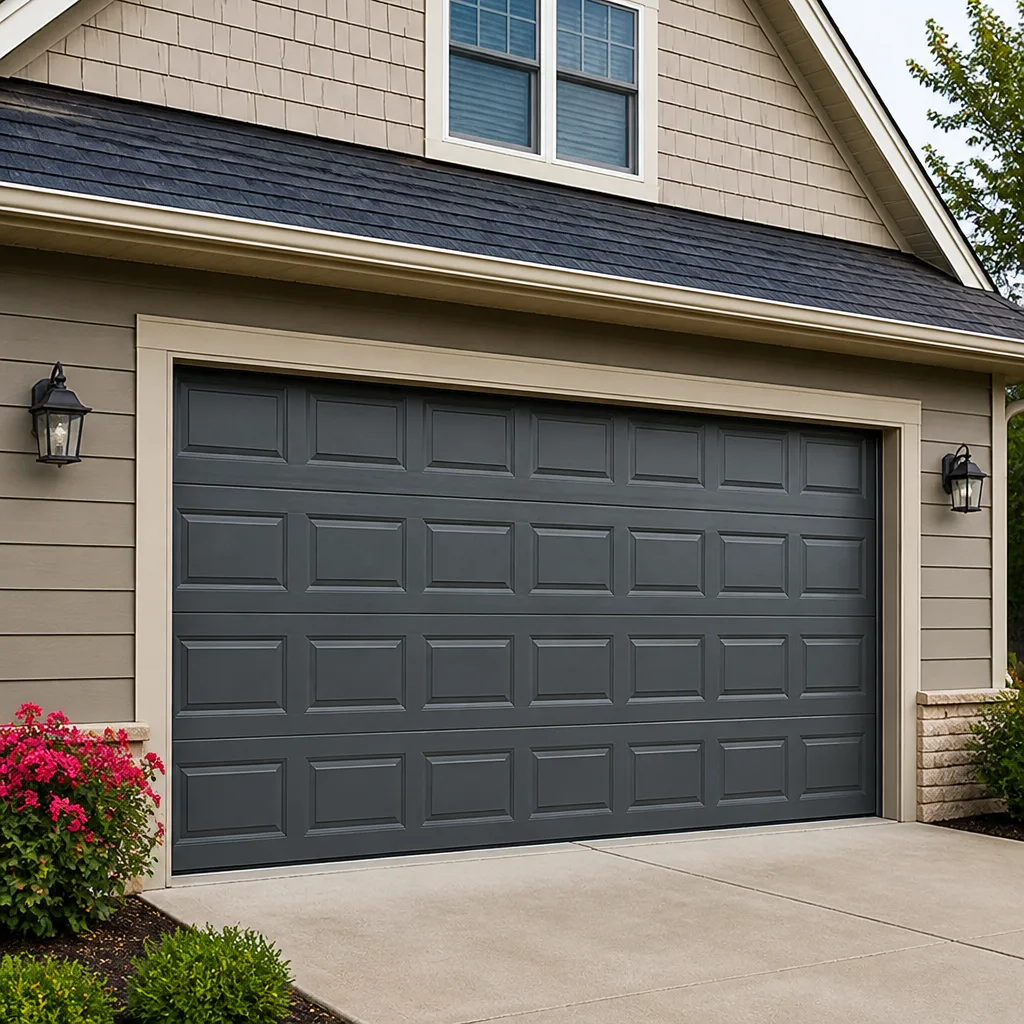 Raised-panel steel
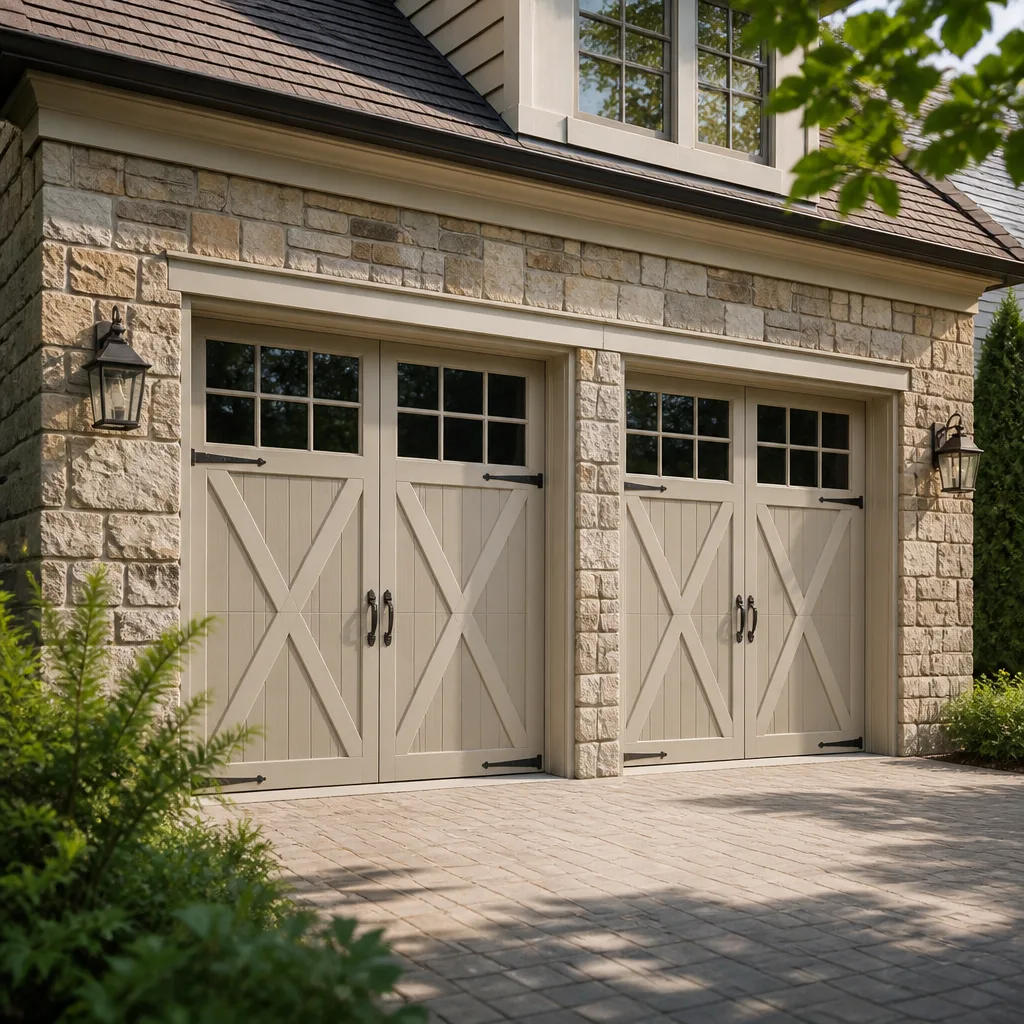 Carriage house
 Modern flush
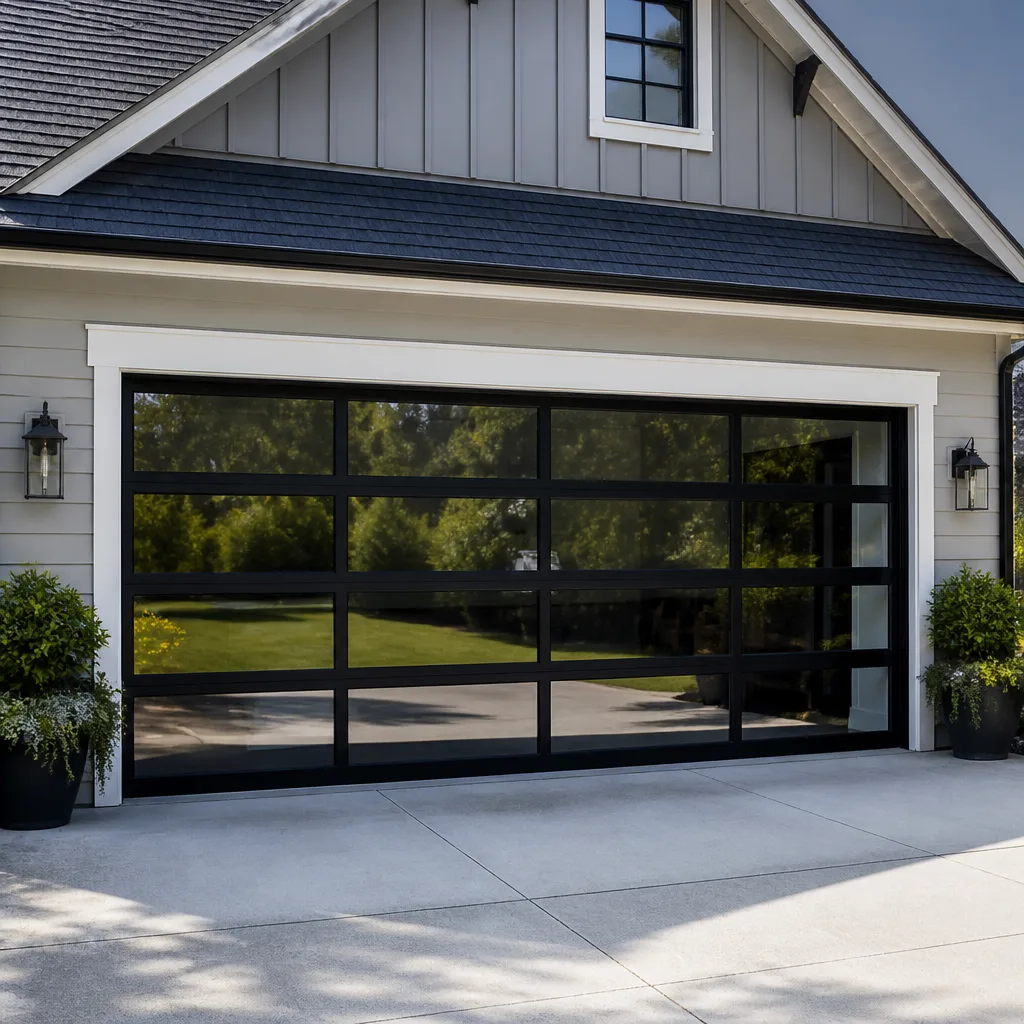 Full-view glass
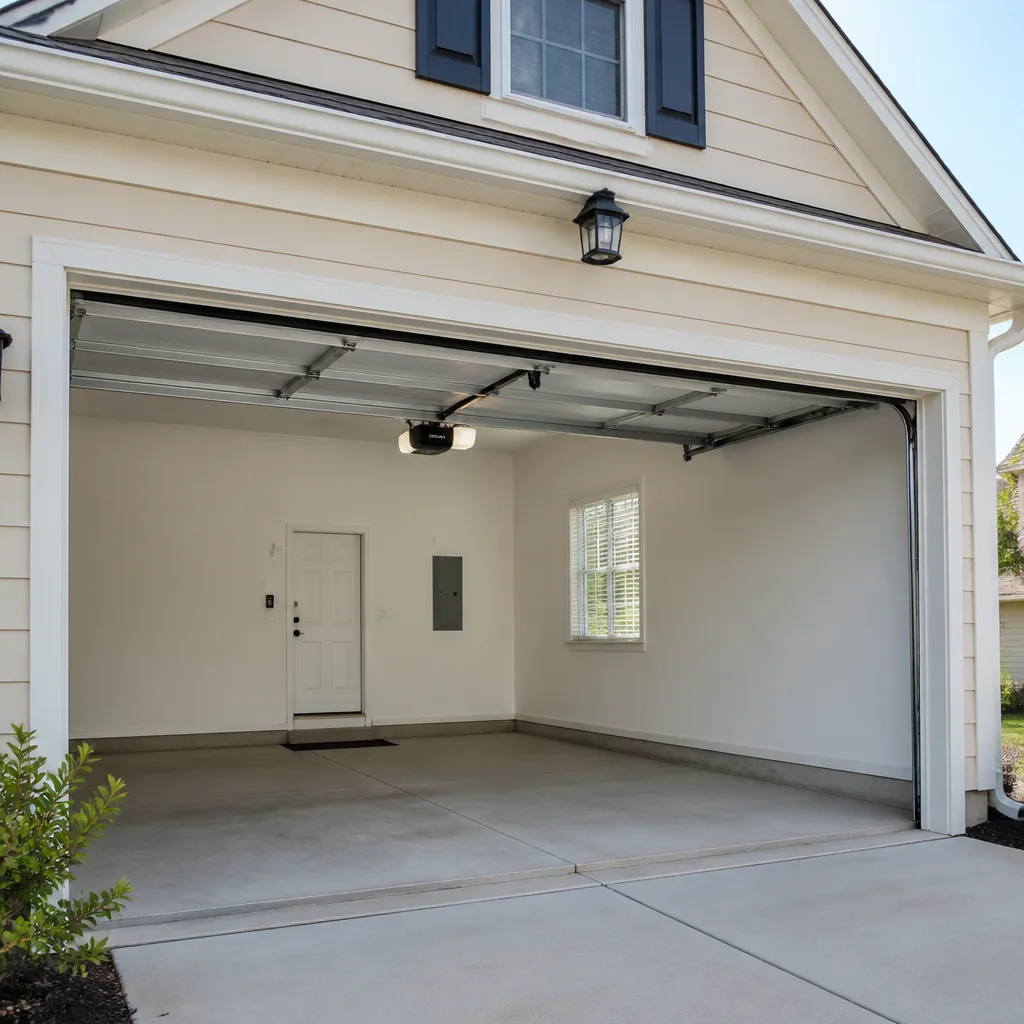 LiftMaster openers
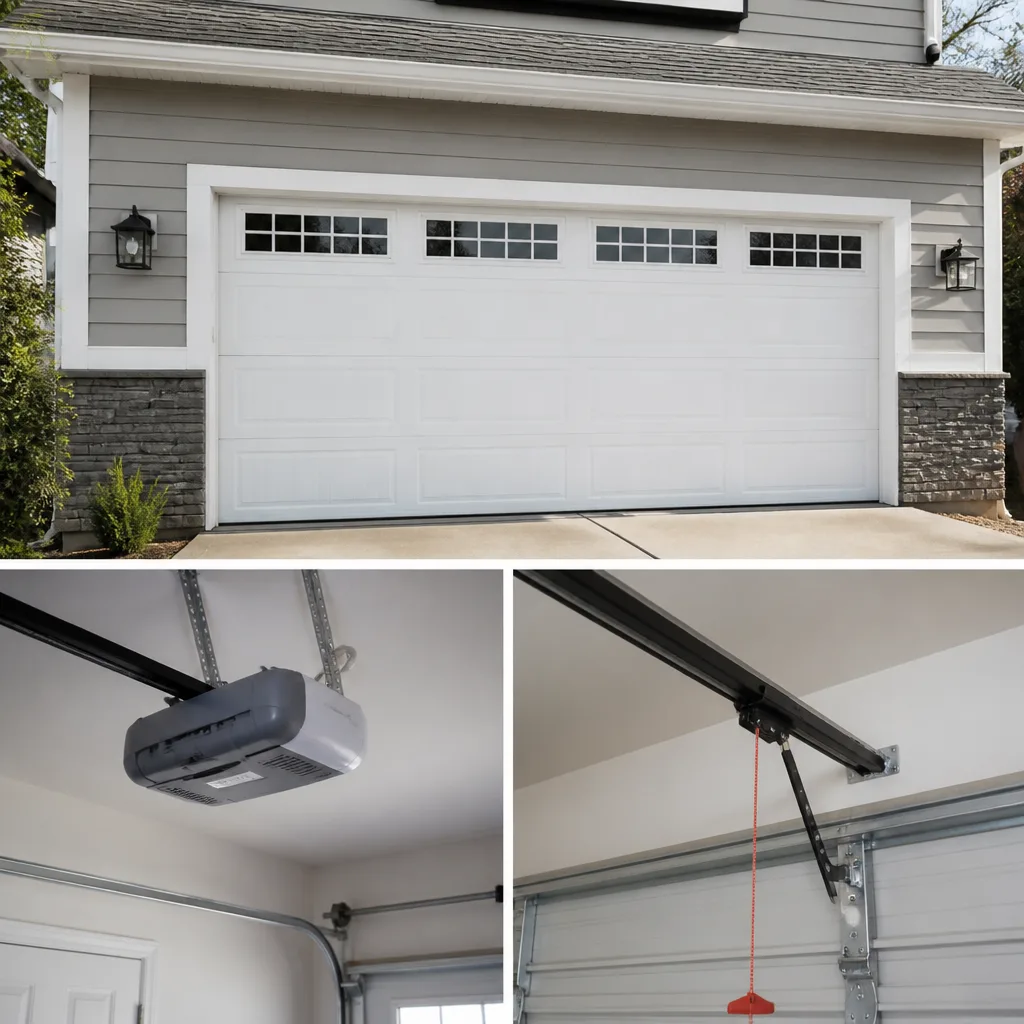 Chamberlain openers
Full 25-point door and opener safety check with every visit - springs, cables, rollers, tracks, and your LiftMaster or Chamberlain opener included
You get a price before we start. It does not change when the pro arrives.
Get your free estimateGarage Door Permits, Codes & Inspections in Enfield, CT: What You Need to Know
A garage door replacement done without the required permit in Connecticut can delay or derail a home sale, and “the contractor handled it” is not a defense that holds up at the closing table. Most Enfield homeowners assume a door swap is like changing a light fixture: buy it, install it, done. That assumption gets people in trouble. Whether your project needs a permit depends on what’s actually changing – the structure, the wiring, the header, the door itself. This guide walks through when Enfield permits apply, what the Connecticut State Building Code asks of garage doors, how to check permit history on your own home, what the inspection involves, and what to do when you find out a previous owner skipped the paperwork.
Quick Answer
In Enfield, a straight like-for-like garage door replacement typically doesn’t require a building permit, but any project that alters the structural opening, changes the header, adds or modifies electrical wiring for a new opener, or involves new construction does. The Connecticut State Building Code sets wind-load and energy requirements for garage doors, and the town’s building department is the authority on whether your specific job needs a permit and an inspection. When in doubt, ask before work starts – a five-minute phone call to the building department is cheaper than a problem at resale.
Styles & brands we work with
- Raised-panel steel
- Carriage house
- Modern flush
- Full-view glass
- LiftMaster openers
- Chamberlain openers
Table of Contents
- When Does a Garage Door Project Need a Permit in Enfield?
- What Connecticut’s State Building Code Says About Garage Doors
- How Enfield’s Climate Affects Garage Door Requirements
- How to Check Permit History on Your Own Home
- What the Inspection Process Looks Like and How to Prepare
- What Happens When a Previous Owner Pulled No Permit
- Hiring a Garage Door Contractor in Enfield: What to Verify
- Common Mistakes to Avoid
When Does a Garage Door Project Need a Permit in Enfield?
The short version: routine replacement usually doesn’t, but structural, electrical, or new-construction work does. The town of Enfield’s building department makes the final call, and it’s worth a phone call before you sign anything. Here’s how the categories usually break down.
Generally no permit required:
- Replacing a garage door with a same-size door of the same type, without cutting into the framing or header.
- Replacing an opener with a compatible unit that uses existing wiring and mounting.
- Replacing worn rollers, hinges, cables, or springs as part of maintenance or repair.
Permit typically required:
- Enlarging or shrinking the door opening. This means cutting into the header or framing, and it’s a structural change.
- Converting a garage to living space, or adding a new garage.
- Adding new electrical circuits for an opener where none existed, or running new wiring through the wall.
- Removing or altering a load-bearing wall or header above the door.
If you’re not sure which category your job falls into, the honest answer is: pick up the phone and ask the building department. Enfield’s inspectors would rather answer a question before the work than sort out an issue after. Getting this wrong isn’t a small thing – unpermitted structural work becomes a disclosure problem when you sell, and lenders and buyers’ inspectors notice.
For ordinary replacement and repair work, you may not need to think about permits at all. Our garage door repair service is set up for exactly these routine jobs, and we’re happy to tell you honestly whether a job you’re describing sounds like it crosses into permit territory.
What Connecticut’s State Building Code Says About Garage Doors
Connecticut’s State Building Code, adopted across the state and enforced locally by each town’s building department, sets requirements for how a garage door must perform structurally and how it must be installed. Two things come up again and again in Enfield conversations about this: wind load and R-value.
Wind load. Garage doors are large, flat surfaces that catch wind. The code requires the door and its mounting hardware to be rated for the design wind pressures of the area. A door rated for a lower wind speed than the code requires may be fine on paper, but it doesn’t meet the standard the town enforces. When a permit is pulled, the inspector will check that the door being installed is rated for the location. This is why buying the cheapest door at a big-box store without checking its rating can backfire on a permitted job – it may not meet the rating your inspector needs to see.
R-value. Energy code provisions in Connecticut address the thermal performance of the building envelope, and an attached garage shares walls and a ceiling with the house. That means the door’s insulation value (its R-value) can matter depending on how the garage is constructed and how it’s used. If your garage is attached and conditioned, or you’re converting part of it, the door’s insulation rating becomes part of the conversation. A basic single-panel steel door won’t cut it.
Labeling. Doors and openers carry manufacturer labels showing their ratings and compliance. The inspector looks for those labels. If the label is missing or the door has been altered, that raises questions.
We work with doors from Clopay, Amarr, Chamberlain, and Genie regularly, and all of these manufacturers publish the wind-load and R-value ratings for their products. When you’re choosing a door for a permitted job, ask for the spec sheet so your installer and inspector are working from the same numbers. If you’re not sure what the code requires for your exact situation, the Enfield building department can point you to the right section. For any garage door opener repair that doesn’t touch the electrical system’s structure, this is usually a non-issue – but a new opener circuit does get reviewed.
How Enfield’s Climate Affects Garage Door Requirements
Enfield sits in northern Connecticut, and that location shapes what a garage door has to handle. Cold winters with repeated freeze-thaw cycles, snow loads that push against a closed door, and summer humidity that works on steel and wood all factor into how a door performs over its service life. This isn’t a code issue on its own, but it’s the reason door selection matters more here than in milder parts of the country.
Freeze-thaw is the quiet one. Moisture gets into small gaps at the bottom seal, freezes, expands, and works the seal and the door’s lower panel loose over several winters. An insulated door with a proper bottom seal handles this far better than a hollow single-panel door.
Snow and ice weight on a closed door sounds like a structural concern, and it can be, but for most residential doors it’s the opener that takes the strain – a door that’s been pushed slightly out of balance by winter cold forces the opener to work harder all season. That’s part of why we recommend checking balance each fall. If your opener starts straining or reversing for no obvious reason in January, a balance check is the first thing to look at, and garage door spring repair is sometimes what the door actually needs.
Summer humidity rusts steel hinges, rollers, and springs faster than dry climates do. Stainless or galvanized components hold up better, and a light seasonal lubrication on the moving parts is a reasonable habit in Enfield.
The practical takeaway for a code or permit conversation: when you’re selecting a door for a permitted job in Enfield, insulation value and weather sealing aren’t just comfort features. They’re part of picking a door that will still work in year ten without being pulled out of balance every winter.
How to Check Permit History on Your Own Home
Before you hire anyone for a replacement, find out what’s already been permitted – or not – on your house. This is one of the most useful things a homeowner can do, and most people never think to. Here’s the process.
- Contact Enfield’s building department. Call or visit the town’s building department and ask for the permit history on your address. Most towns maintain these records and will provide them, sometimes for a small fee, sometimes free.
- Ask specifically about garage-related permits. A permit history will show new construction, additions, electrical work, and structural changes. Look for anything involving the garage, the door opening, or the wiring for an opener.
- Request copies of the final inspection sign-offs. A permit that was pulled but never signed off at final inspection is a red flag. It may mean the work was never completed to code.
- Compare what you find against what’s actually installed. If the records show no permit for a door that clearly isn’t original to the house, you’ve found the gap.
- Ask the seller, if you’re buying. During the sale process, a seller must disclose known unpermitted work. If you’re the buyer, put the question in writing.
This is also worth doing if you’re about to sell. A buyer’s inspector who finds unpermitted structural work on a garage can stall the closing, and the burden falls on you to resolve it. Knowing what’s on record before you list saves a lot of last-minute scrambling.
A final inspection sign-off is the document that matters. A permit without a final inspection is like a building inspector’s report with no conclusion – it tells you someone started the process, not that anyone signed off. Ask for the sign-off specifically.
What the Inspection Process Looks Like and How to Prepare
When a permit is required, the inspection is the step where the work gets checked against the code. Here’s how it typically runs in Enfield.
What inspectors look at:
- The door’s label and rating against the approved plan and the code’s wind-load requirement.
- The mounting hardware, brackets, and track attachment to the framing.
- The header condition and any structural changes described on the permit.
- Electrical work if the permit covered new opener wiring or a new circuit.
- The opener’s safety reverse feature and the door’s manual release.
- The R-value of the door if the permit touched an insulated envelope situation.
How to prepare:
- Keep the plans, spec sheets, and permit documents somewhere the inspector can find them.
- Make sure the manufacturer’s labels are visible and intact. Don’t paint over them.
- Clear the garage so the inspector can walk around the door and opener.
- Have the installer’s contact info handy in case the inspector has questions.
- Test the safety reverse before the inspection. A door that doesn’t reverse on contact will fail.
If the inspector finds a problem, it’s almost always something fixable – a label that wasn’t installed, a safety reverse that needs adjustment, a spec sheet that wasn’t on file. We’ve seen jobs where the door itself was perfectly fine but the inspection failed on paperwork alone. Our repair and service work sometimes includes tidying up a failed inspection item, and we’d rather help you get it right the first time.
What Happens When a Previous Owner Pulled No Permit
Discovering that a previous owner made changes without a permit is more common than most homeowners realize. It’s not a crisis, but it needs to be handled honestly. Here’s what your options look like.
What you can do about it:
- Leave it and disclose it. If the work was done long ago, is holding up fine, and involves no safety issue, you can disclose it during a sale and move on. Buyers aren’t required to run screaming – they’ll often ask for an inspection or a credit.
- Permit it retroactively. Many towns let you pull a permit for existing work so it can be inspected. This usually involves an inspection and possibly some corrections. Enfield’s building department can tell you whether retroactive permitting applies to your situation.
- Undo it or bring it up to code. If the unpermitted work involved a structural change or a safety concern, you’ll likely need to correct it. A door or opening that isn’t rated for the code’s wind load is the most common correction.
The risks of leaving it:
- A sale can slow down or fall through when a buyer’s inspector flags it.
- An insurance claim involving the garage could get complicated if the work wasn’t permitted.
- A structural issue that goes unchecked can become an expensive fix later.
The good news is that most unpermitted garage door work is cosmetic or routine and doesn’t cause a problem. The problem cases are the ones where a door opening was enlarged, the header was cut, or the electrical work was improvised. Those are worth sorting out, and the way to sort them out starts with a call to the Enfield building department to find out what they’ll accept.
Hiring a Garage Door Contractor in Enfield: What to Verify
Before you hire anyone, verify four things. Ask for them, get them in writing, and don’t skip this because a quote seems good. Any reputable contractor will be happy to provide them.
Four things to verify before signing:
- State licensing. The contractor should be licensed as their state requires. Ask for the license number if available and verify it with the state. A legitimate garage door professional won’t hesitate.
- Insurance and bonding. Ask for proof of general liability coverage and workers’ compensation if they have employees. If a door falls during installation, you want to know who’s covered.
- Written estimate. Get the full price, what’s included, and what’s not included, in writing, before any work starts. The written estimate is the price, and it shouldn’t change once work begins unless you approve a change in writing.
- Permit handling. For a job that requires a permit, decide in writing who’s pulling it. If a contractor says they’ll handle it, get it in writing and confirm with the building department that the permit was actually pulled before work begins. The homeowner is often named on the permit, so the responsibility doesn’t go away just because the contractor promised to deal with it.
The spring and opener side of the job has a different risk profile. Garagedoor springs are under high tension, and a DIY attempt to replace one can cause serious injury. We work with all eight major brands, including LiftMaster, Chamberlain, Genie, Clopay, Amarr, Wayne Dalton, Craftsman, and Raynor, and our technicians have up to 15 years of experience. If a spring has snapped, that’s not a job to take on yourself, and it’s why we treat spring work as its own specialty rather than an add-on.
One more thing: for a job that doesn’t need a permit, you don’t need a contractor to have a license to pull one. But you should still verify licensing and insurance for any fault that could fall on your shoulders. A written estimate and a signed acknowledgment of who’s responsible for what is worth the extra five minutes.
Common Mistakes to Avoid
- Assuming a permit isn’t needed because the door looks the same size. Measure first and ask the building department. A “same size” door that required trimming the header isn’t a same-size job.
- Letting the contractor say “we handle the permit” without verifying. The permit often names the homeowner. Ask for a copy of the pulled permit before work starts – don’t take someone’s word for it.
- Buying the cheapest door without checking wind-load and R-value ratings. A door with a lower rating than the code requires can fail inspection, and you’ll pay to replace it a second time.
- Skipping the balance check on an automated door. A door that’s been pushed out of balance by winter cold will strain the opener and wear the springs faster, and it’s a safety issue in a power failure.
- Trying to replace high-tension springs yourself. This is genuinely dangerous work. A snapped spring under tension can cause serious injury, and it’s one of the most commonly botched DIY garage door repairs. Leave it to trained hands.
- Ignoring permit history on a home you’re about to buy. Ask the Enfield building department what’s on record. It takes one phone call and can save a closing delay.
- Assuming a failed inspection is the contractor’s problem. If the door isn’t rated or the safety reverse doesn’t work, the homeowner pays to fix it. Confirm who’s responsible in writing before work starts.
See the difference
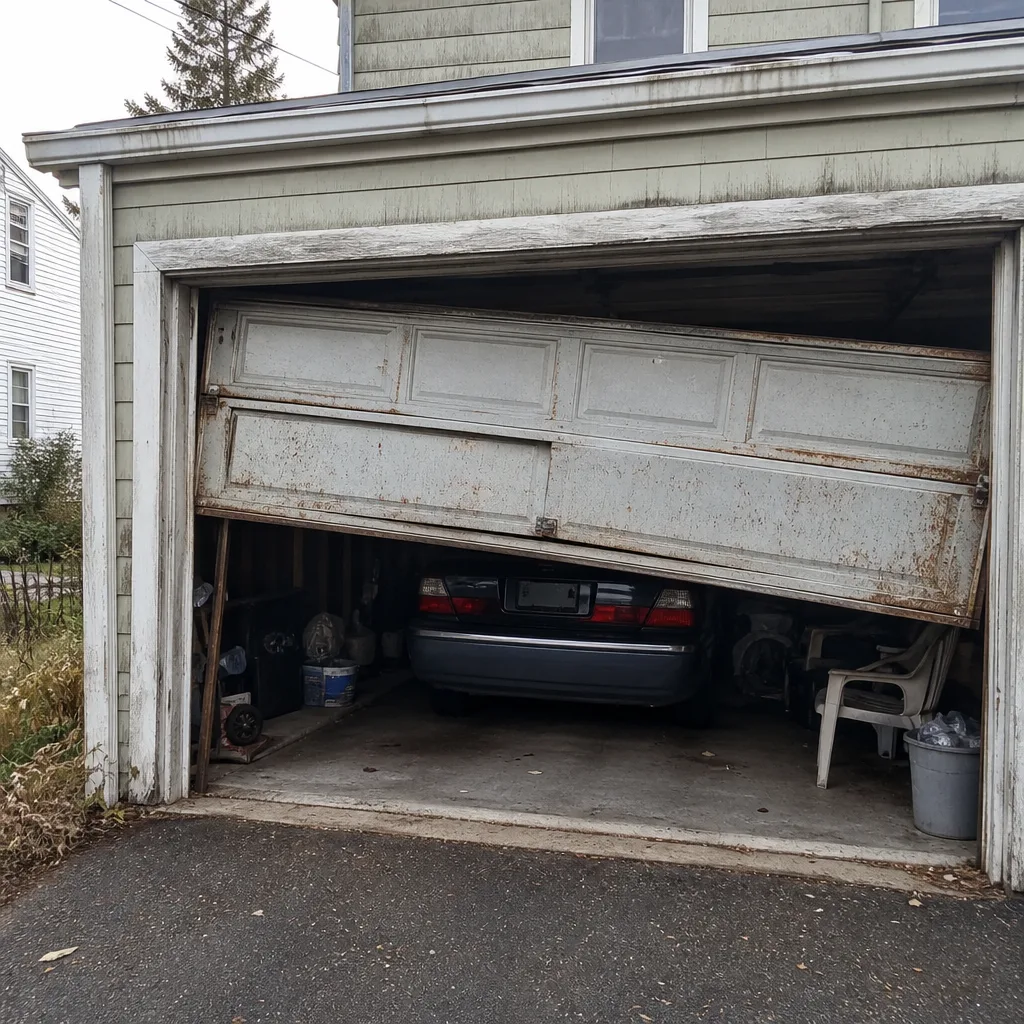 Before
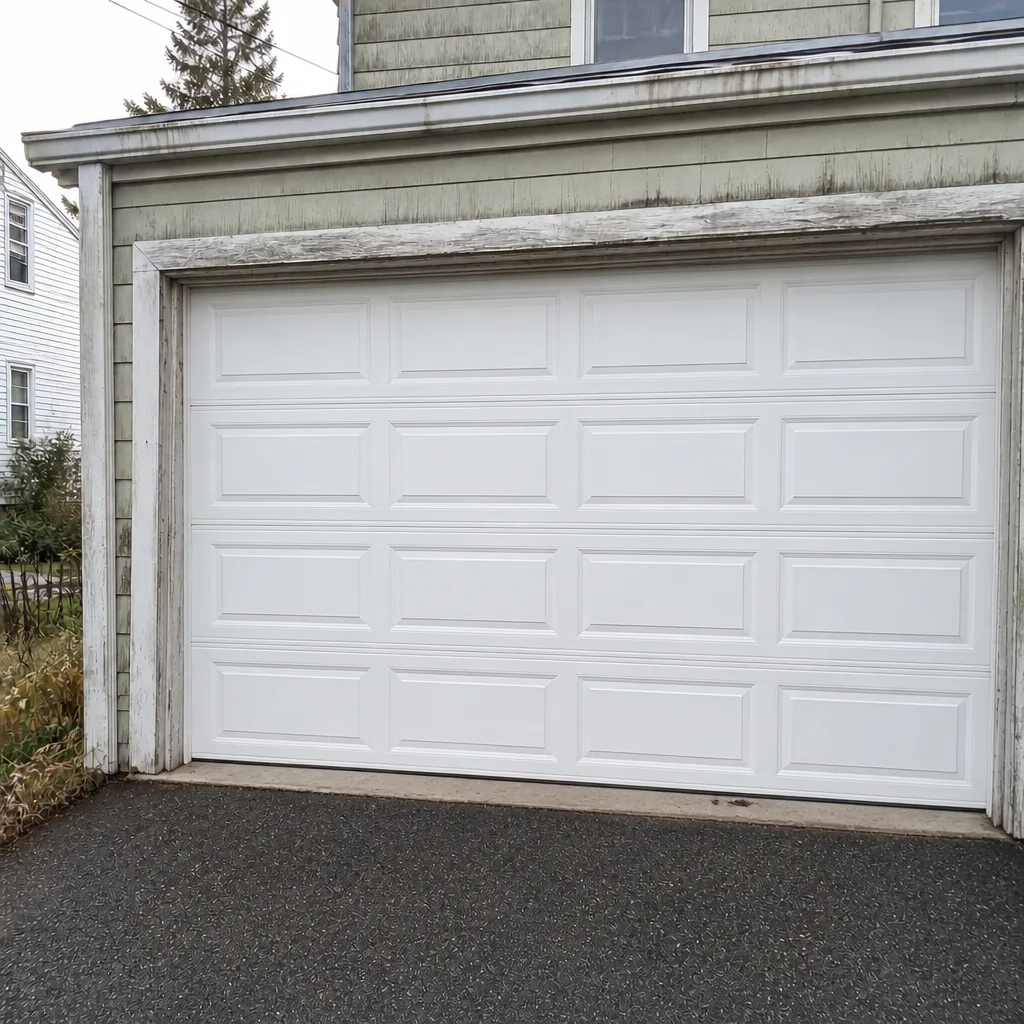 After
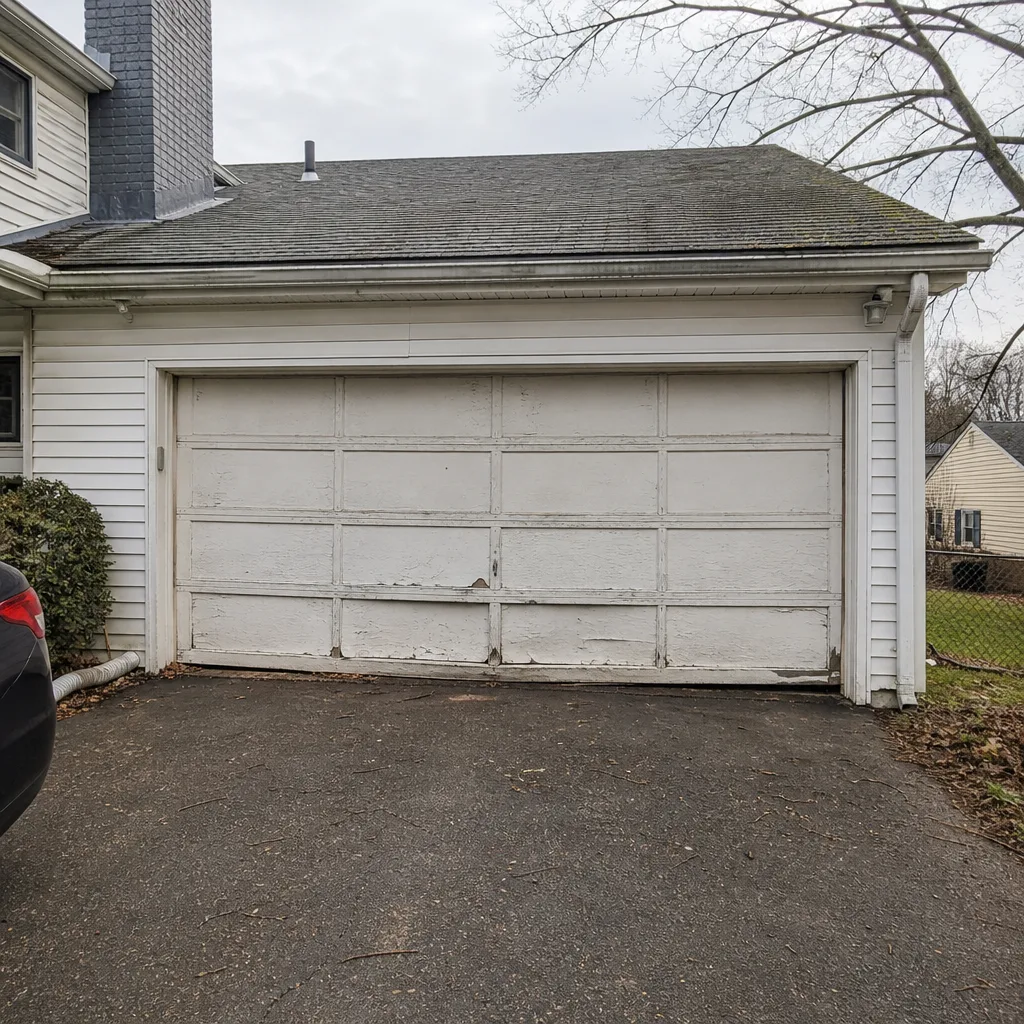
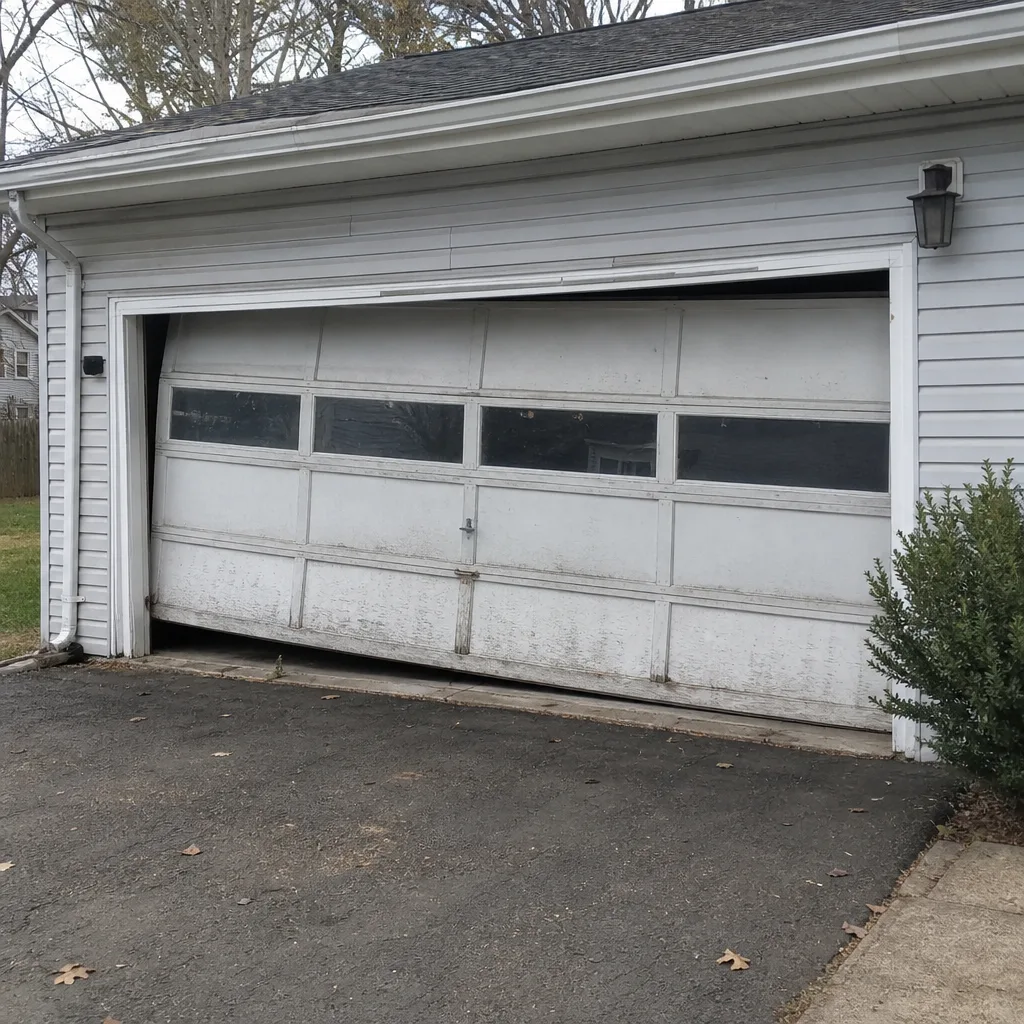 Before
 After
 Before
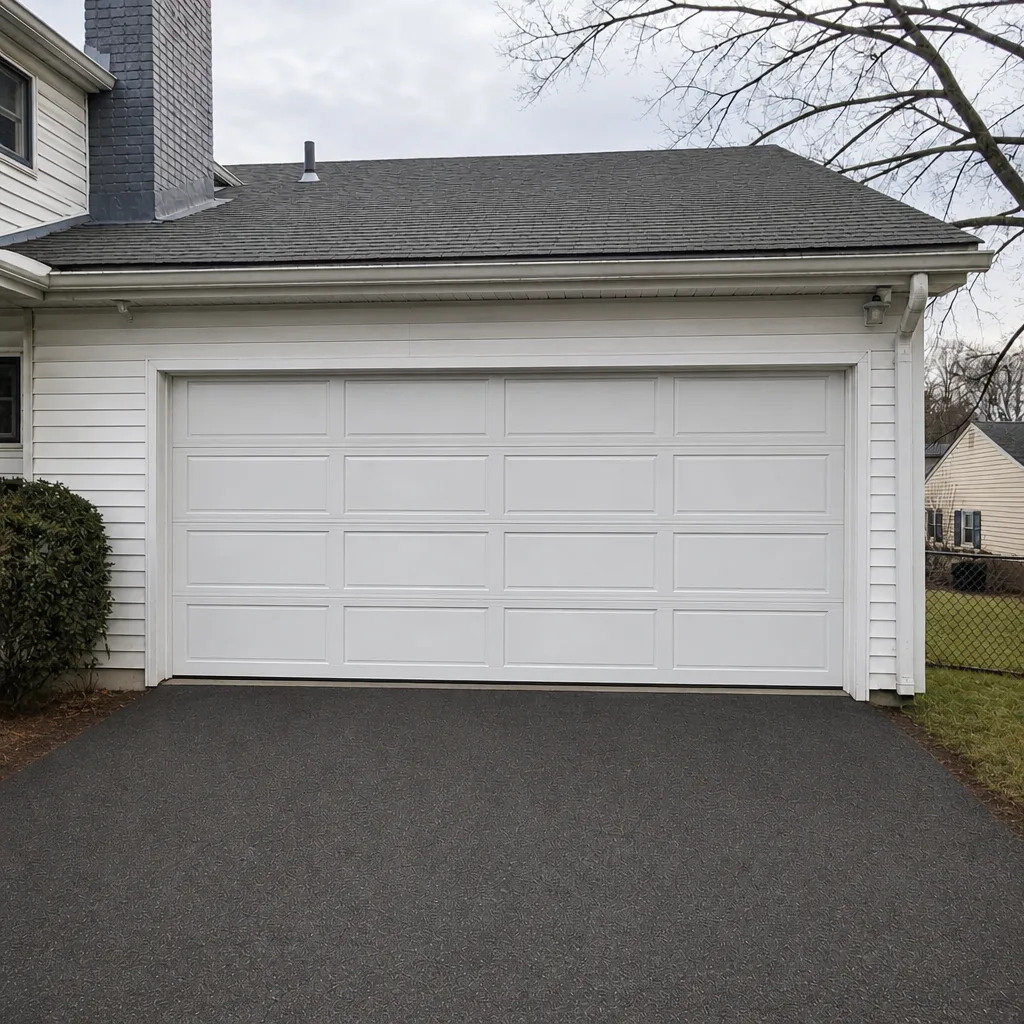 After
When to Call a Professional
Some jobs clearly need a trained technician, and some questions are worth a phone call even if you’re not sure. Call a professional when a spring has snapped or you hear a loud bang from the garage, when the door won’t open or close and you can’t see an obvious blockage, when the opener reverses or strains for no clear reason, when a door has come off its track or is visibly crooked, or when you’re planning a replacement and need the wind-load and R-value conversation handled properly. Garage door springs are dangerous and openers can fail in ways that surprise homeowners. Enfield Garage Door Repair offers free estimates in Enfield – call (833) 468-5947. For anything that can’t wait until Monday, our emergency garage door service is available for stuck or broken doors, and our technicians have up to 15 years of experience handling the brand you already have. No runaround, no upsell pressure.
Frequently Asked Questions
Usually not, if the replacement is a like-for-like swap with no changes to the framing, header, or electrical wiring. If the door opening changes size, the header is altered, or new wiring is added for an opener, a permit is typically required. The Enfield building department makes the final call, so ask them directly before work starts. Call (833) 468-5947 for a free estimate if you’re ready to move forward.
The Connecticut State Building Code sets wind-load requirements for the door and its mounting, and energy code provisions address the door’s R-value (insulation rating) depending on how the garage is constructed. Doors carry manufacturer labels that document these ratings, and inspectors check them. Ask your installer for the spec sheet, and confirm the details with the Enfield building department for your specific situation.
You have a few options: disclose it and leave it, pull a retroactive permit and have it inspected, or bring the work up to code. The right choice depends on what was changed. If it was structural or a safety concern, correcting it is the safer path. Start with a call to Enfield’s building department to find out what they’ll accept. If you need the door brought up to standard, call (833) 468-5947 for a free estimate.
Keep the permit documents and manufacturer spec sheets accessible, make sure the door’s labels are visible and not painted over, clear space around the door and opener, and test the safety reverse before the inspector arrives. Have the installer’s contact info on hand in case questions come up. Most failures are minor and fixable. Call (833) 468-5947 if you need help getting an inspection item corrected.
You can replace a like-for-like door yourself in some cases, but the safer answer is to check with the building department first. A door replacement involves safety reverse settings, spring tension, and balance – all of which can be dangerous to get wrong. Garage door springs in particular are under high tension and can cause serious injury if handled incorrectly. Call (833) 468-5947 for a free estimate and let a trained technician handle it.
Replacing an opener with a compatible unit that uses the existing wiring and mounting generally doesn’t require a permit. Adding new electrical circuits or running new wiring through the wall does. When in doubt, ask the Enfield building department. For compatible replacements, our opener repair service works with the equipment you already have, including Chamberlain and Genie systems. Call (833) 468-5947 for a free estimate.
The Bottom Line
Garage door permits in Enfield come down to what’s changing, not whether the door is new. A same-size swap typically doesn’t need one; structural, electrical, or new-construction work does. The Connecticut State Building Code sets wind-load and R-value requirements that inspectors check, and the town’s building department is the authority on your specific job. Check permit history before you hire anyone, verify licensing and insurance in writing, and make sure the written estimate you sign is the price you pay. When a job crosses into structural or electrical territory, call. Enfield Garage Door Repair is here with free estimates – call (833) 468-5947.
Written by the team at Enfield Garage Door Repair.