Last updated November 23, 2026
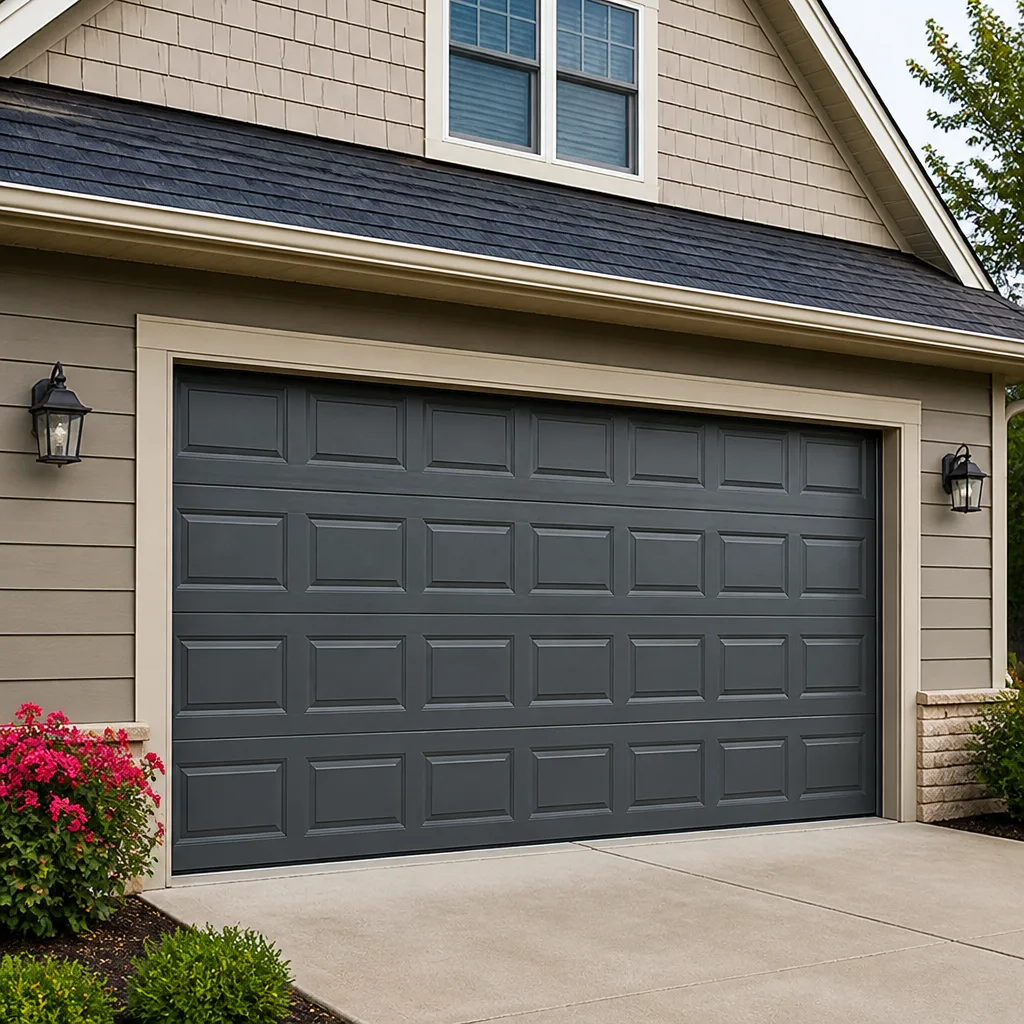 Raised-panel steel
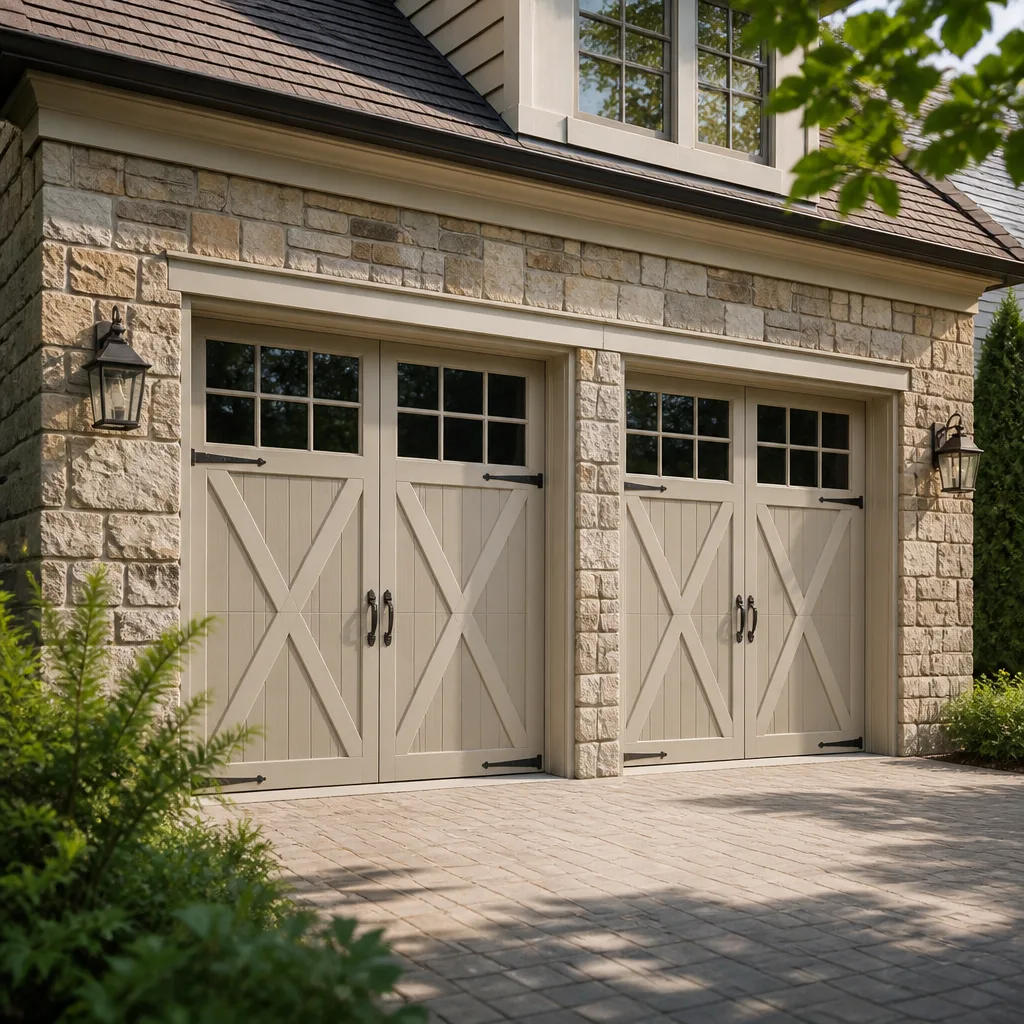 Carriage house
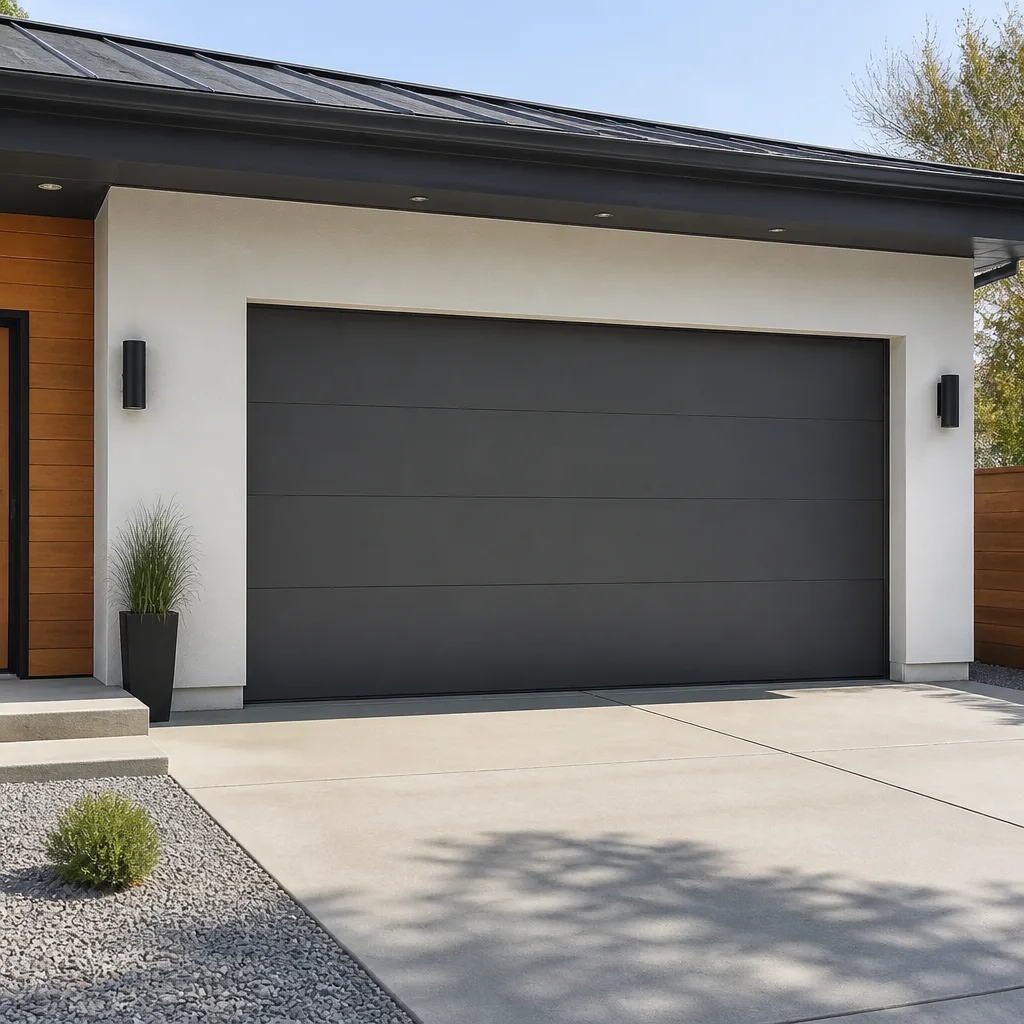 Modern flush
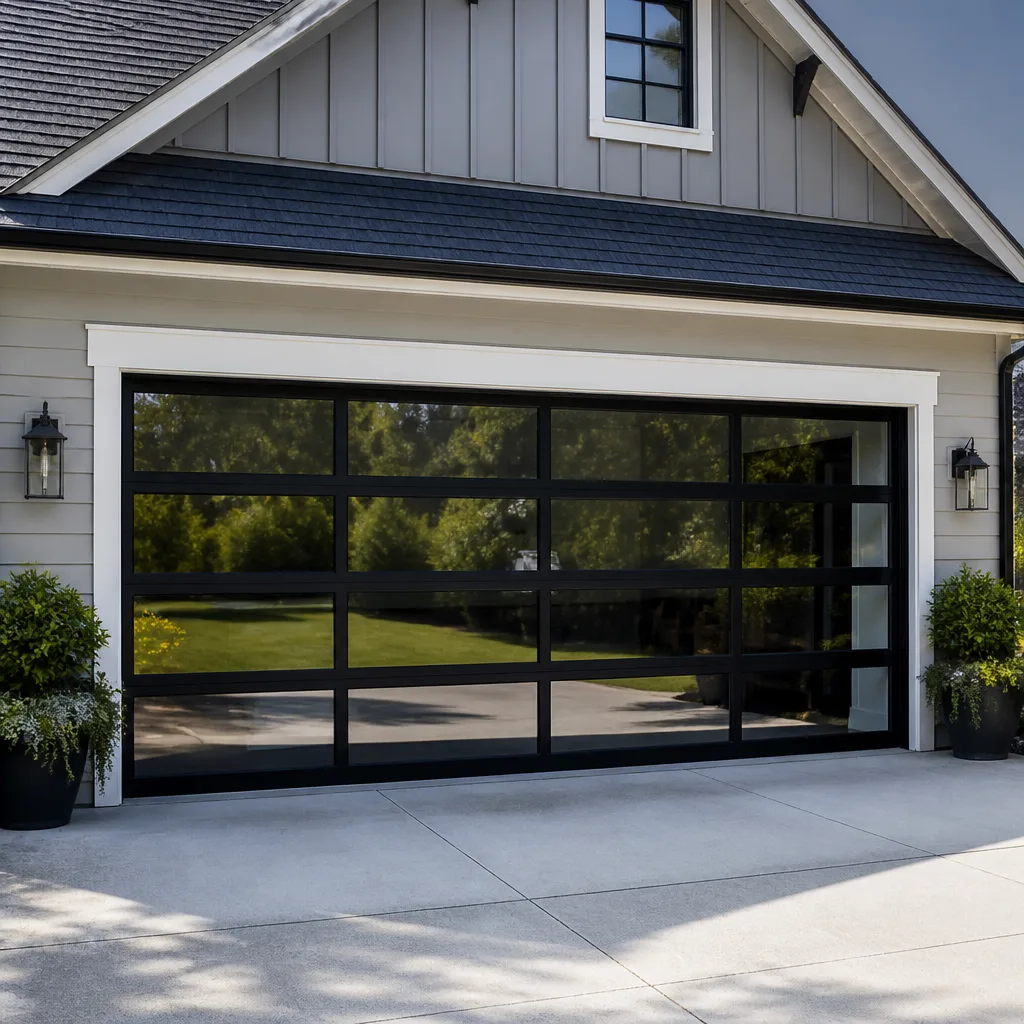 Full-view glass
 LiftMaster openers
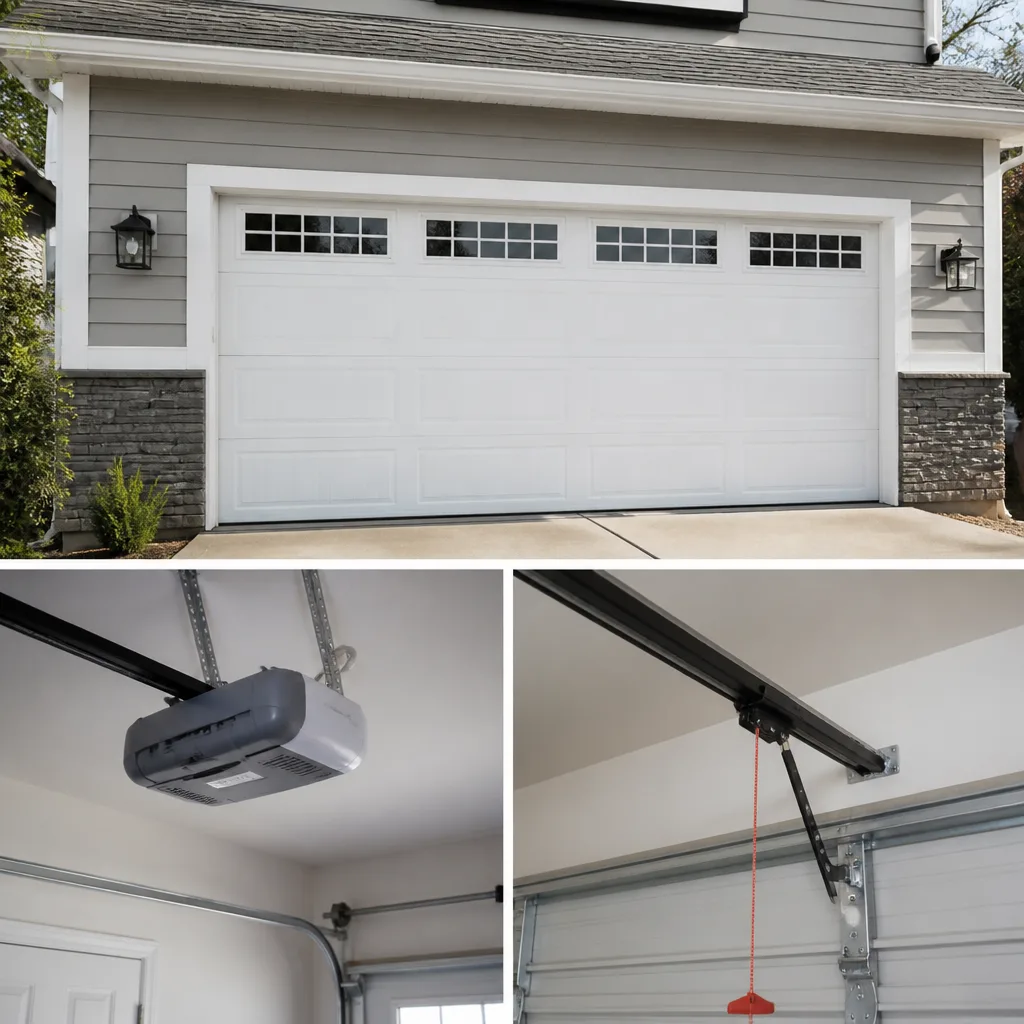 Chamberlain openers
Full 25-point door and opener safety check with every visit - springs, cables, rollers, tracks, and your LiftMaster or Chamberlain opener included
You get a price before we start. It does not change when the pro arrives.
Get your free estimateGarage Door Warning Signs: An Enfield Homeowner’s Reference Guide
Most homeowners judge a garage door by how it felt this morning. It opened, it closed, the car got out. That’s the wrong test. A door that’s “a little slow” and a door that’s about to drop a spring look almost identical from the driver’s seat, and the gap between those two situations is what sends people either into a needless panic or into a repair bill that was avoidable six weeks earlier. What follows isn’t a symptom checklist. It’s a diagnostic framework: what each warning sign actually means mechanically, which ones mean stop using the door today, and which ones mean call next week. We work on doors across Enfield, and this is the reference we’d hand a neighbor.
Quick Answer
Garage door warning signs fall into three urgency tiers. Signs that mean stop using the door immediately are a snapped torsion spring (the door won’t lift or drops hard), visible cable fraying or a cable hanging loose, and a door that comes down faster than you can react. Signs that mean schedule service soon are grinding or popping noises, a door that reverses before touching the floor, and opener lights that flash instead of moving the door. Signs to keep an eye on are mild squeaking, a slight wobble, and slow response from a wall button. Match your symptom to its tier before you do anything else.
Styles & brands we work with
- Raised-panel steel
- Carriage house
- Modern flush
- Full-view glass
- LiftMaster openers
- Chamberlain openers
Table of Contents
- The Three-Tier Triage System: When to Stop, When to Schedule, When to Watch
- What Each Noise Means, Mapped to Its Mechanical Cause
- Structural vs. Cosmetic: Reading the Door From the Ground
- When the Opener Is Blaming the Door
- The Cumulative Failure Pattern Nobody Talks About
- Why Enfield Weather Accelerates Certain Failures
- The Line Between Owner Maintenance and Dangerous DIY
- The Most Common Misdiagnosis We See
The Three-Tier Triage System: When to Stop, When to Schedule, When to Watch
Every warning sign on a garage door belongs to one of three buckets, and sorting your symptom into the right bucket is 80% of the work. The point of triage is to prevent two opposite mistakes: using a door that’s genuinely unsafe, and paying for a service call the door didn’t need yet.
Tier 1: Stop using the door now
These are mechanical failures where continued operation risks injury or makes the repair larger. A torsion spring is under heavy tension even when the door is down, and a failed spring changes how the whole lifting system carries weight. Our rule is simple: if any of these are present, leave the door where it is and call.
- A loud bang from above the door, followed by a door that feels extremely heavy or won’t lift
- Visible fraying, kinks, or slack in the lift cables
- A door that slams down instead of lowering under control
- Uneven gaps at the bottom or one side visibly lower than the other
- A bent or disconnected track that’s pulling away from the frame
Tier 2: Schedule service soon
These signs mean something is wearing and will fail, but the door is still stable enough to use a few more times. Book garage door repair rather than waiting for the failure to become a Tier 1 emergency. In our experience, most Tier 2 issues in Enfield homes are caught at the point where the fix is still small.
- Grinding or popping during part of the cycle
- A door that reverses before it contacts the floor
- Opener lights flashing and the door not responding
- Rollers that look worn, flat-spotted, or chipped
- A remote that works only when you’re within a few feet of the door
Tier 3: Watch and log it
Mild symptoms that haven’t changed in weeks usually mean the door needs lubrication or adjustment, not parts. Keep a note of when the noise first appeared and whether it’s gotten worse. If a Tier 3 sign is unchanged after a month, you’ve got a maintenance item. If it starts to escalate, it’s moved to Tier 2.
- Occasional squeaking in cold weather
- A small shudder as the door starts to move
- A wall button that needs to be pressed twice
- Minor paint peeling at the bottom edge of a steel panel
What Each Noise Means, Mapped to Its Mechanical Cause
Homeowners describe garage door sounds vaguely (“it makes a noise”), and vague descriptions make diagnosis slower. The sound almost always points to a specific component. Here’s how we map them.
Grinding
Grinding is metal-on-metal contact, and it comes from one of three places: worn rollers dragging through the track, a torsion drum binding on its bearing plate, or a dry hinge pin. If grinding happens only during the first and last few inches of travel, it’s almost always the rollers meeting the curved section of track. If it’s constant, check the hinge pins before anything else. A door that grinds and also slows down is telling you the whole system is fighting itself.
Popping or snapping
Popping is the sound of stored energy releasing in a small jump. From the torsion bar, it’s the spring coil slipping on the shaft – a signal the spring is losing tension unevenly. From the panel joints, it’s a hinge or a section buckle flexing under load. A single pop when the door starts to lift is often the torsion spring’s winding cone shifting. If the pop is followed by the door going lopsided, that’s a Tier 1 sign. Handle it the way you’d handle garage door spring repair, because that’s usually what it turns into.
Squealing
Squealing is friction, not breakage. It’s almost always a roller that’s lost its bearing grease, a hinge pin running dry, or the torsion shaft in need of lubricant. If it disappeared after you lubricated, good. If it came back within a month, the roller bearing is gone and the roller needs replacing. Squealing in the cold months is common in Enfield because the lubricant thickens as temperatures drop.
Banging
Banging is impact, and impact is the one you don’t ignore. Hitting the floor harder than usual means the door’s travel is misadjusted, a sensor is failing, or the spring is no longer counterbalancing the door’s weight. If your door bangs down and you feel it in the floor, schedule service before using it again. Repeated banging will eventually crack the bottom panel and stress the lift cables.
Rattling
Rattling comes from loose fasteners: hinge screws, track brackets, or opener mounting bolts. It’s a Tier 3 sign on its own but worth tightening because loose hardware amplifies every other noise on the door.
Structural vs. Cosmetic: Reading the Door From the Ground
You can do a useful inspection without a ladder. Stand at the center of the door, look at it while it’s fully down, and then watch it through one full cycle. What you’re checking is symmetry, alignment, and cleanliness – not paint or finish.
Cosmetic signs (log them, don’t panic)
- Fading or chalking on a painted steel panel – surface only, no effect on function
- Peeling paint along the bottom edge
- Minor scratches on the outside face
- Dents at the very bottom of a steel panel from a curb strike
Structural signs (look twice, call sooner)
- Horizontal cracks across a panel – the panel has taken an impact or the door is flexing
- A visible bow in a panel, particularly on double-wide doors
- A gap at the floor that appears only when the door is closed
- Tracks that are visibly out of parallel with the door frame
- Bolts backing out of the hinges or the track brackets
- Cables that leave the drum at a strange angle or cross over one another
Cracks and bows in a stile or section are the signs people misread most. A cracked panel on a Clopay or Amarr door doesn’t always mean the whole door needs replacing – often it means the panel does, and that the door’s balance and travel should be checked. A bowed panel, on the other hand, almost always indicates an imbalance in the lifting system that caused the bow, not the other way around. Once you spot a structural sign, do a full cycle and listen for any Tier 1 or Tier 2 symptom to accompany it.
When the Opener Is Blaming the Door
A lot of what looks like an opener problem is actually a door problem the opener is reacting to. The opener is the smartest component in the system and it’s built to refuse work when the door isn’t moving freely. Two clues tell you which is which.
Clue one: does the door move freely by hand? With the opener disengaged (the red manual release), a properly balanced door should lift partway and stay put where you let go. If it drops or feels heavy, the problem is mechanical – springs, cables, rollers, or track – and no amount of garage door opener repair will fix it. The opener is doing exactly what it should: stopping.
Clue two: what is the opener doing when it’s not moving the door? If the light flashes and the motor doesn’t run, that’s a fault code. If the motor runs and the door doesn’t move, the operator’s drive gear or the door’s lift system is the culprit. If the door reverses immediately, the safety sensors or force settings are the problem. If the remote works only up close, the logic board or the antenna is the issue.
Common opener-side symptoms mapped to what they usually mean
- Wall button works, remote doesn’t – remote battery, or the antenna in the motor head
- Remote works, wall button doesn’t – wall circuit, not the opener
- Lights flash and nothing moves – the travel limits or force settings need resetting, or a sensor is blocked
- Door reverses before touching the floor – sensor misalignment or a mechanical drag on the door
- Door stops halfway up – operator force setting, or the door’s balance has shifted
On the Genie and Chamberlain units we see most often in Enfield, the LED codes tell you which of these categories you’re in within seconds – provided you read them right. On older Wayne Dalton and Craftsman openers, the flashing pattern is less granular and requires testing the door manually first. This is the difference between diagnosing by brand knowledge and guessing.
The Cumulative Failure Pattern Nobody Talks About
Here’s the part homeowners miss: a door with five mild warning signs is more urgent than a door with one severe sign. A single severe sign is a discrete failure that usually shows itself, gets fixed, and is done. A cluster of mild signs is a system that’s failing as a whole, and it usually fails suddenly – often when the weather turns or when the door’s been used more than usual.
Think of the door as four subsystems that wear together: the lifting system (springs and cables), the travel system (track, rollers, hinges), the operator (motor and electronics), and the seal (weatherstripping and bottom rubber). A cluster of signs across two or more subsystems is a signal the door is at the end of a wear cycle and needs a full assessment, not a spot fix.
Signals that should make you book a full assessment
- Noise during the cycle and the door doesn’t feel balanced by hand
- Slow response from the opener and grinding during travel
- A slight wobble and a visible gap at the floor
- Repeated cycling of the same symptom after lubrication
- Any Tier 3 sign that’s worsened over two weeks
- A remote that stops working from the driveway and a wall button that needs pressure
Any two of these together warrant a service visit. Any three together warrant a full door assessment, including a spring balance test and cable inspection. On a door we’ve been called out for a single symptom, a routine inspection often turns up one or two others in the same wear stage, and fixing them together is almost always less expensive than fixing them one at a time.
Why Enfield Weather Accelerates Certain Failures
Enfield sits in a four-season climate with real freeze-thaw swings, hot humid summers, and cold snaps that arrive fast. Garage doors are one of the few home systems that operates in that weather every single day. That combination shapes which warning signs you’ll see and when.
In winter, metal contracts. A torsion spring’s coils move closer together, the torsion bar tightens, and doors that were perfectly balanced in October can feel heavy in January. Cold-thickened lubricant makes rollers and hinges squeal. Steel panels that get salt spray from the road can corrode faster at the bottom edge, which is why panel corrosion is the cosmetic sign we watch most closely in Enfield. We don’t have salt air here, but the road salt tracked in by tires does its own damage to the base of the door.
Summer does the reverse. Heat expands the door slightly, wood sections on older doors can swell, and the bottom seal can dry and crack. If your door suddenly has a wider gap at the floor in July than it did in April, the seal is due for replacement.
Spring and fall are the transition seasons, and this is when the “little slow” doors become the “won’t open” doors. A spring that’s been weakened by a winter of heavy cycles doesn’t need much to fail in the next temperature swing. Spring and autumn are the two windows where scheduling a service visit ahead of a failure is easiest – the door is still working, the diagnosis is clear, and the fix is a planned repair rather than a same-day emergency call.
The Line Between Owner Maintenance and Dangerous DIY
A good homeowner can safely handle a fair amount of garage door upkeep: lubrication, cleaning, weatherstripping, and tightening visible fasteners. Beyond that line, the risk doesn’t scale with how careful you are – it scales with the stored energy in the system, which you can’t see and can’t judge by feel.
Safe for owners
- Lubricating rollers, hinges, and the torsion shaft with a garage-door-specific spray
- Cleaning the tracks with a damp cloth (not solvent)
- Replacing the bottom weatherstripping
- Sweeping the sensors clean and confirming they’re aligned
- Tightening a visible hinge screw with a screwdriver
Leave for trained technicians
- Adjusting or replacing torsion springs – the spring is under heavy tension and stored energy can release without much warning
- Replacing lift cables – the cable under a broken spring can whip
- Adjusting the cable drums on the torsion shaft
- Replacing torsion bar bearings
- Adjusting travel limits or force settings without a code reference
Torsion and extension springs are the single most common area where a homeowner ends up calling us after a DIY attempt. The problem is that a spring under tension looks safe when the door is down, and the danger is in the tension, not the position. We treat every spring repair as a two-person job with deliberate safety stops. If you’re not sure which side of the line a repair falls on, assume it’s the technician side.
The Most Common Misdiagnosis We See
The most common misdiagnosis is treating a mechanical failure as an opener failure by replacing the opener. The second is treating cosmetic wear as structural failure and getting a quote for a full door replacement that isn’t needed. Both errors have the same root cause: reading the symptom without testing the system.
When we get called for a door that “needs a new opener,” we test the door by hand first. Nine times out of ten on a Genie or LiftMaster-equipped door, the operator is doing exactly what the safety circuit should do – refusing to lift a door that’s too heavy because a spring has lost tension or a roller is dragging. Replacing the opener doesn’t fix that; it just puts a new opener under the same load and shortens its life.
The reverse misdiagnosis is when homeowners see a small dent at the bottom of an Amarr or Wayne Dalton panel and assume the door is totaled. Most panel-only damage is repairable, particularly on doors where the bottom section is a separate replaceable component. What makes it structural is when the damage coincides with a visible imbalance or a crack that extends through the stile.
This is why we keep the diagnostic framework rather than a list of symptoms. A symptom in isolation is a data point. A symptom tested against the mechanical system is a diagnosis. That’s what Enfield Garage Door Repair was built around – reading the door, not guessing from the sound.
Common Mistakes to Avoid
- Continuing to use a door with a broken spring “just for now.” A door missing spring tension puts all the weight on the opener and cables, which are not designed to lift it. The extra load can cause a cable failure, not just a heavier door.
- Replacing the opener before testing the door by hand. Disengage the opener with the manual release and lift the door. If it doesn’t stay where you let go, the problem is mechanical, not electrical, and the opener replacement won’t help.
- Lubricating with whatever is in the garage. WD-40, motor oil, and silicone spray can attract dust and make the rollers worse. A garage-door-specific spray is what the manufacturer specifies and it lasts longer between applications.
- Ignoring a door that reverses on its own. A door that reverses means either the safety sensor is blocked or the door is binding. Both are worth addressing before the door cycles several hundred more times.
- Assuming every sound needs a repair. Enfield’s temperature swings make some seasonal creaking normal. The trick is whether the sound has changed since you first heard it.
- Calling a general handyman for a spring repair. Spring repair is a specialty within garage door work. Not every handyman has the tooling or training for it, and the risk of an injury isn’t worth the price difference.
- Repainting over panel cracks. Paint hides the crack you need to see on your next inspection. Address the crack first, paint second.
See the difference
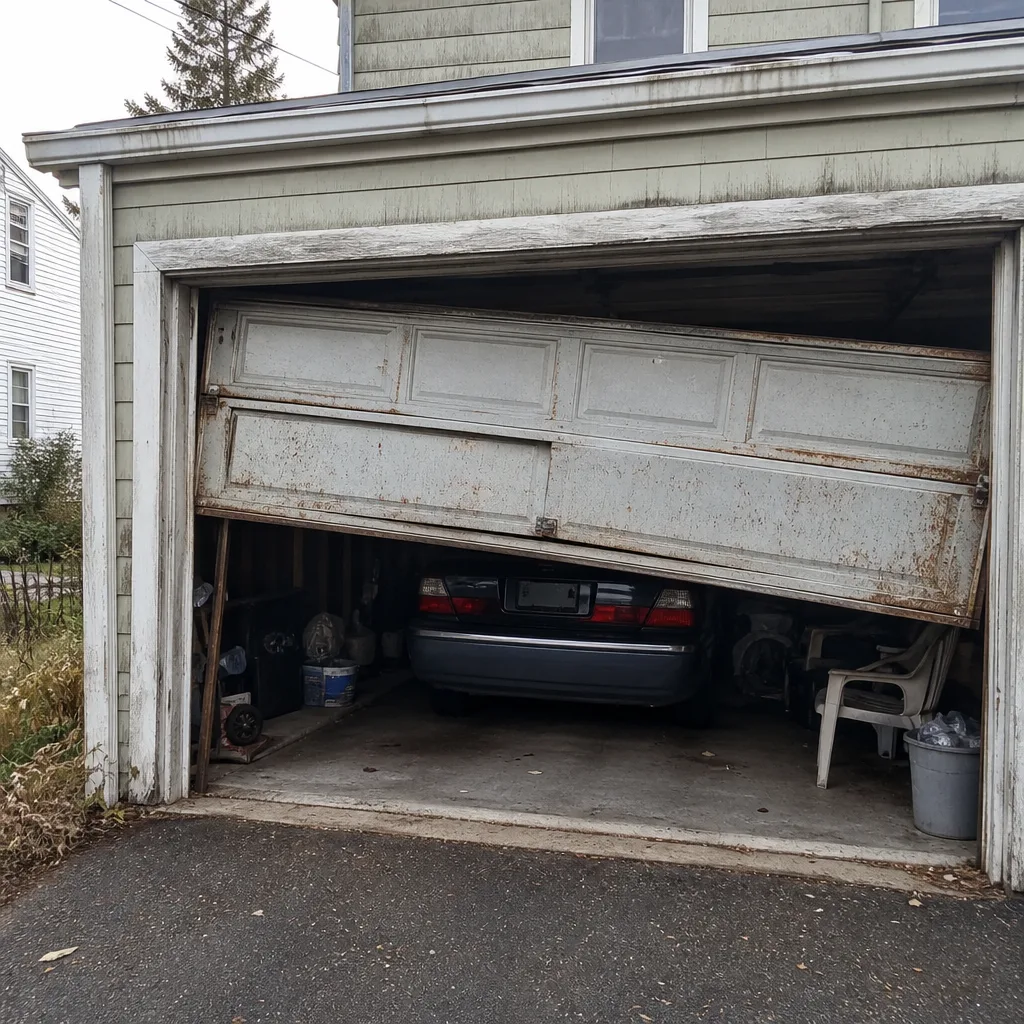 Before
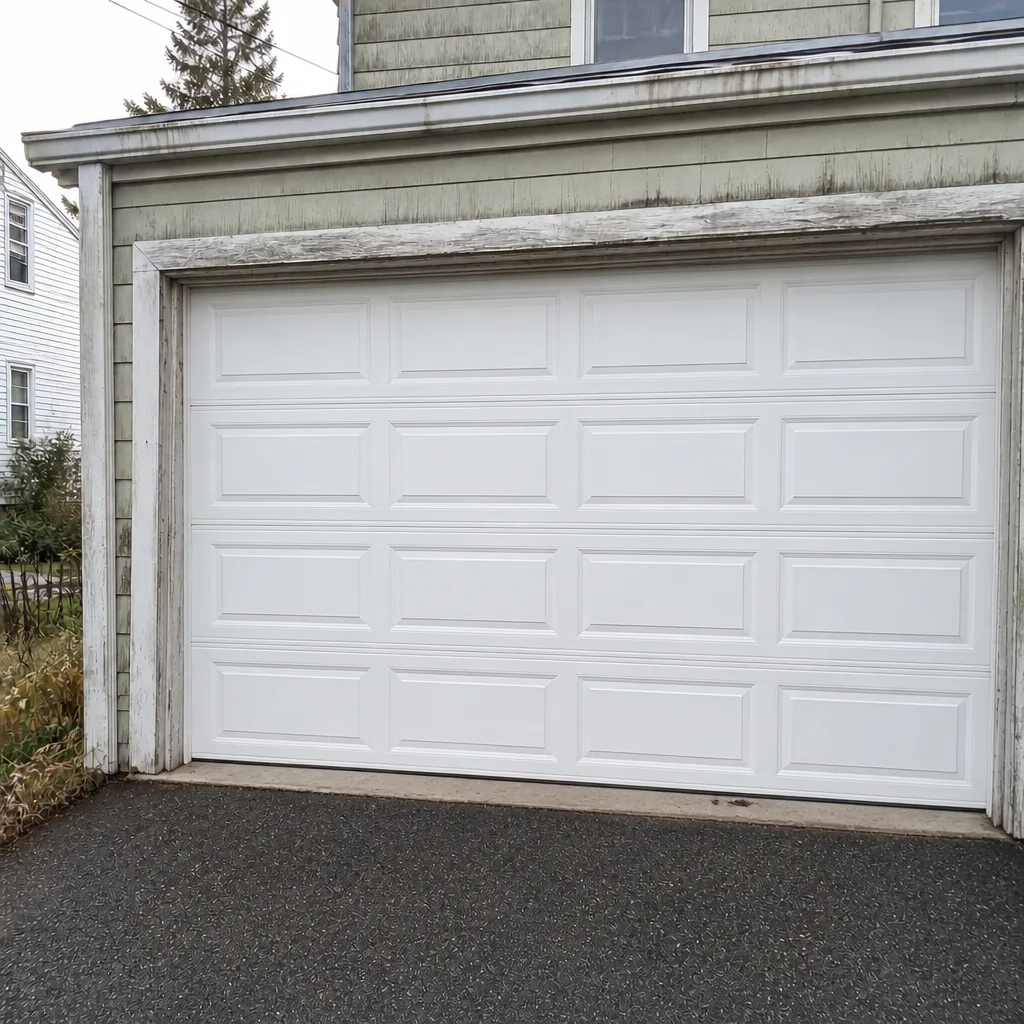 After
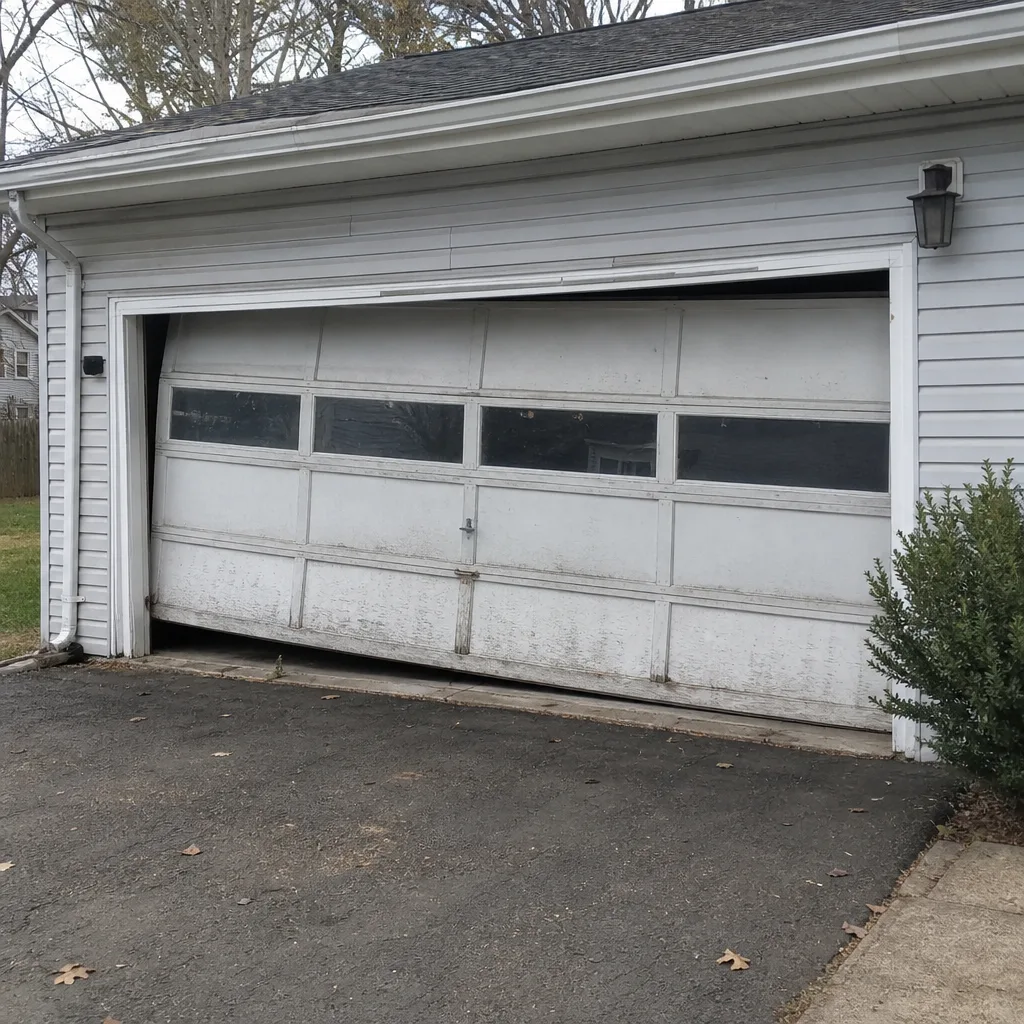 Before
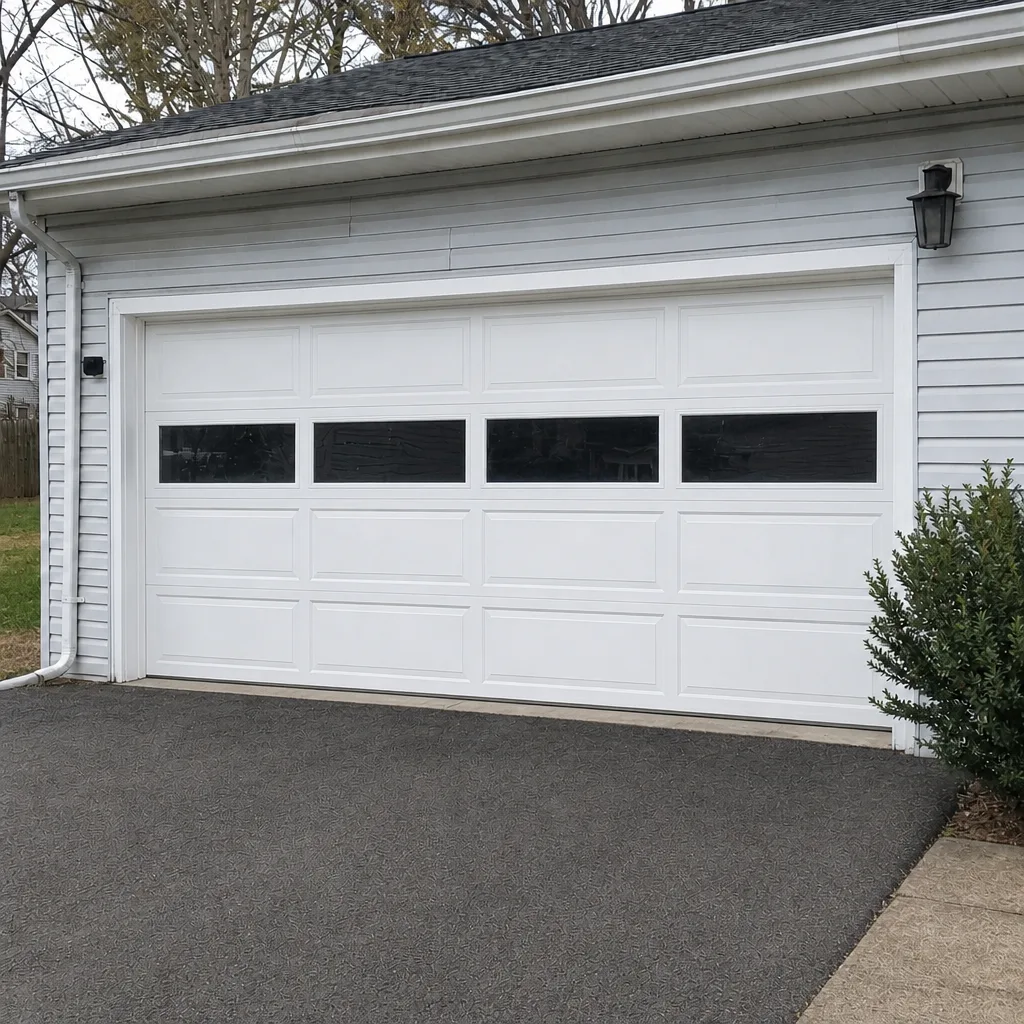 After
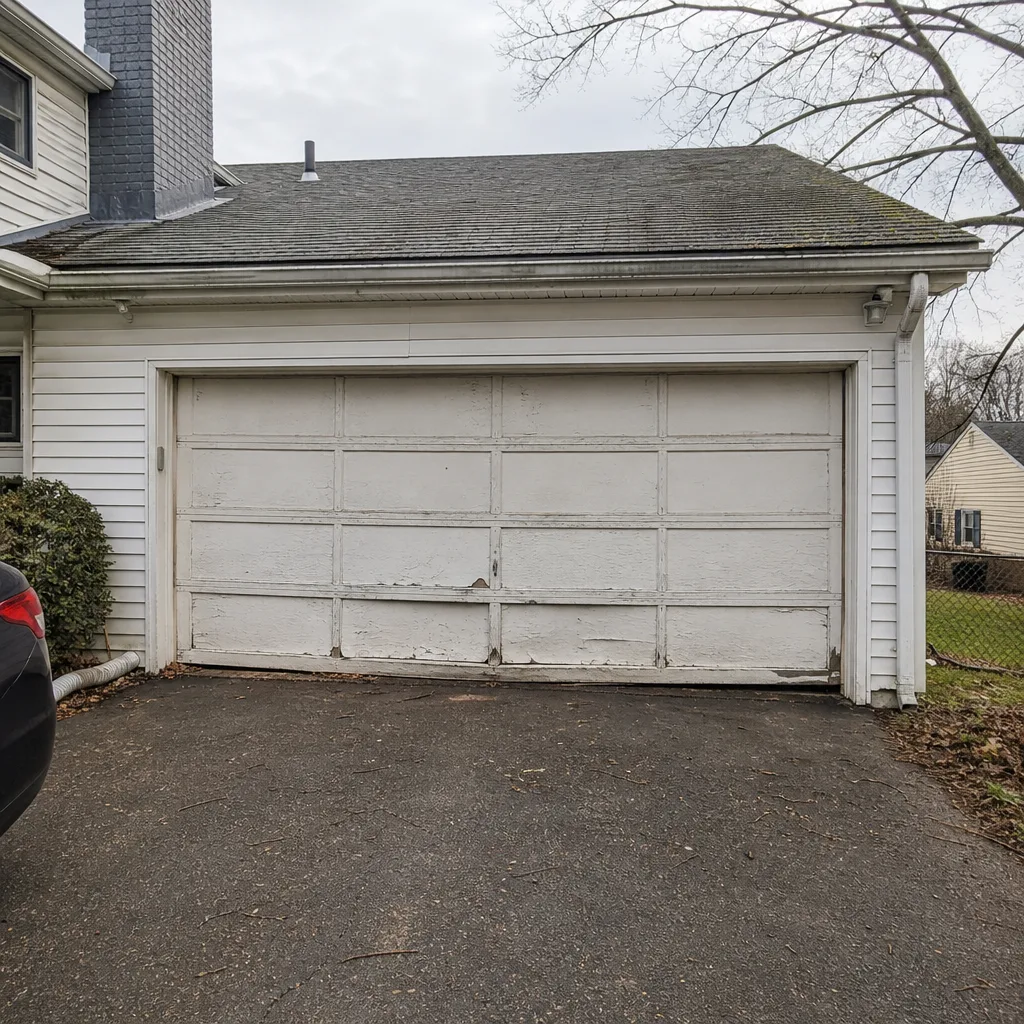 Before
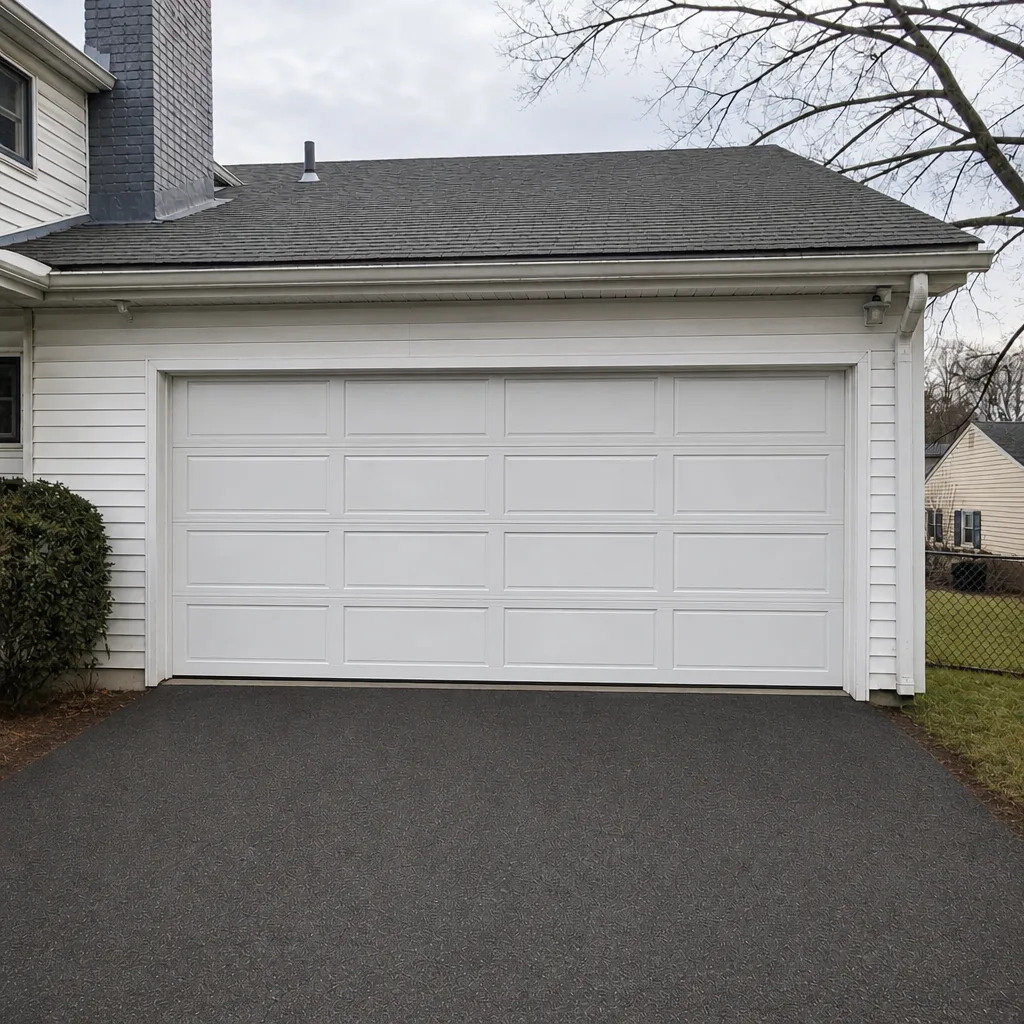 After
When to Call a Professional
Call a professional any time a sign appears in Tier 1 or when two or more Tier 2 or Tier 3 signs show up together. Call if your door has reversed on its own at any point, if the manual release doesn’t hold the door when you test it, if the door feels heavy in your hand, or if a sound you’ve been ignoring has gotten louder. These are the signs where a diagnostic call is cheaper than the failure the sign is warning you about. Enfield Garage Door Repair offers free estimates in Enfield – call (833) 468-5947. Our technicians have up to 15 years of experience and will tell you which tier your symptom falls into before you commit to anything.
Frequently Asked Questions
Serious signs are a broken spring, a frayed or slack cable, a door that slams, or a track that’s visibly bent. Those are Tier 1 signs and mean stop using the door and call a professional. If the only sign is noise or slow response, it’s usually Tier 2 or Tier 3 and can wait for a scheduled visit. When in doubt, take the door out of service and get it assessed rather than test the question by cycling it.
Not necessarily, but it’s worth a call. A single pop at the start of the lift is often the torsion spring’s winding cone shifting, which means the spring has lost uniform tension. If the door also looks lopsided or feels heavy by hand, treat it as a Tier 1 sign and stop using the door. If the pop is at the panel joints and the door runs level, it may simply be a hinge or a section flexing under load. Call (833) 468-5947 and we can usually tell you which by asking two questions about how the door behaves. Estimates are free.
Flashing lights on an opener usually mean one of three things: a safety sensor is blocked or misaligned, the travel limits have lost their set point, or the force setting is telling the motor it shouldn’t move a door this heavy. All three are diagnostic codes, and all three are quick to check. The important distinction is whether the door moves freely by hand when disengaged. If it doesn’t, the blinking is a symptom of a mechanical problem, not an opener problem. We handle both sides on sites across Enfield, and a single visit usually covers the diagnosis and the repair.
No. Leave it closed and stop pressing the opener. The opener motor and the lift cables are not designed to lift the door’s full weight, and using the door in that state can damage the cables, the opener’s drive gear, and the door panels. It also moves the repair cost in the wrong direction. Call (833) 468-5947 as soon as you notice, and we’ll schedule a trained technician to assess the spring system – estimates are free.
Different brands have different weak points. Older Craftsman openers are known for drive gear wear that produces grinding; Genie units often show logic board issues first (erratic remote range); Wayne Dalton doors with their proprietary spring systems show balance problems more subtly than torsion systems. LiftMaster and Chamberlain operators tend to have very clear LED fault codes, which actually makes diagnosis faster. Knowing the brand narrows the diagnosis before we’re even on site, which is why we work with the eight major brands rather than passing calls to a middleman.
Once a year is the standard recommendation for most homes, and in Enfield’s climate you want that annual visit timed before the first real cold snap. A service visit includes lubrication, balance testing, cable inspection, spring tension check, and a full-cycle test. On doors that cycle more than four times a day (a family home with two cars), twice a year is a reasonable choice. The annual visit is also when a technician can flag a Tier 3 sign before it becomes a Tier 2 call, which saves both time and money.
Our Final Word
The point of this guide is to replace panic with a framework. Read your door, sort the symptom into the right tier, and act on the tier rather than on the noise. Tier 1 means stop using the door and call a professional. Tier 2 means book a repair this week. Tier 3 means log it, lubricate, and watch for escalation. Multiple small signs together are more urgent than any single severe sign, because a cluster means a system, not a part. Enfield’s four-season weather means the door’s wear cycle is real and ongoing, so a light annual service is cheaper than the call that arrives after a spring snaps.
If you’ve sorted a symptom into Tier 1 or Tier 2, don’t spend the weekend test-cycling it to see how bad it is. Call Enfield Garage Door Repair at (833) 468-5947 for a free estimate. We handle spring repair, opener repair, door repair, and full installation across Enfield, we work with the brand you already have, and there’s no runaround between you and the technician.
Written by the team at Enfield Garage Door Repair.